

The Gist
- Published 3 August 2026 by UK Visas & Immigration
- Applies to most UK visa and immigration applicants
- Biometrics include fingerprints and a digital photo
- You must attend an appointment to provide biometrics
Why it matters: Understanding biometric requirements helps you avoid delays and ensures your UK visa application is processed correctly.
This guide explains the UK Visas & Immigration guidance on biometric information, covering who must provide it, what data is collected, and how the process works. It is essential reading for visa applicants and caseworkers, with clear steps and practical tips.
Biometric information caseworker guidance is the official UK Visas & Immigration document that explains how biometric information is collected, used, and stored for UK visa and immigration applications. If you are applying for a visa, settlement, or citizenship, you will likely need to provide your fingerprints and a photograph. This guide walks you through the key points so you know what to expect and how to prepare.
At a glance
- Published: 3 August 2026
- Publisher: GOV.UK — UK Visas & Immigration
- Applies to: UK visa and immigration applicants
- Data collected: fingerprints and digital photograph
- Collection points: visa application centres and UKVCAS centres
What Is Biometric Information Caseworker Guidance?
This guidance is published by GOV.UK — UK Visas & Immigration. It sets out the rules and procedures for collecting biometric information from people who apply to come to the UK or to stay here. It is aimed at caseworkers who process applications, but it is also useful for applicants who want to understand the process.
The guidance was published on 3 August 2026. It explains what biometric data is collected, why it is collected, and how it is used to confirm your identity and check your immigration history.
Caseworkers rely on this guidance to make consistent decisions. Applicants can use it to prepare correctly. The guidance is part of a wider set of immigration rules, so it should be read alongside the specific rules for your visa type.
Who Must Provide Biometric Information
Most people applying for a UK visa, entry clearance, or leave to remain must provide biometric information. This includes applicants for work visas, study visas, family visas, and settlement. The exact requirements depend on your nationality and the type of application you make.
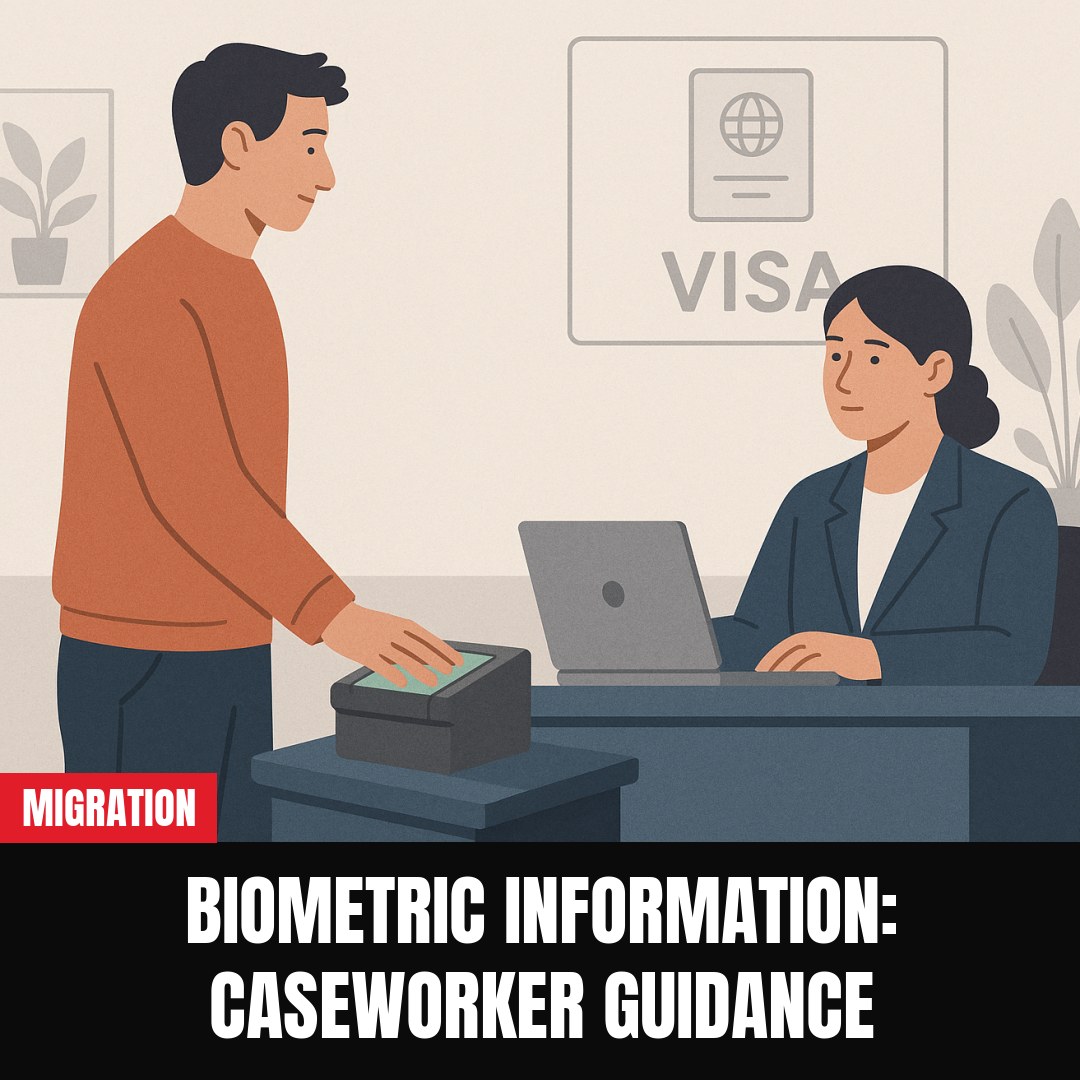
The guidance states that biometric information is usually collected at a visa application centre or a UK Visa and Citizenship Application Services (UKVCAS) centre. You will need to attend an appointment in person.
If you are applying from outside the UK, you will visit a visa application centre in your country. If you are already in the UK, you will book an appointment at a UKVCAS centre.
Some applicants may be exempt. For example, children under a certain age, diplomats, or those with physical conditions that make fingerprinting impossible may have different rules. Always check the official guidance for your specific situation.
What Biometric Data Is Collected
The guidance explains that the UK collects two main types of biometric data: fingerprints and a digital photograph. These are used to create a biometric record that is stored securely.
Your fingerprints are scanned electronically. The photograph is taken at the appointment. Both are checked against UK records to ensure you have not previously used a different identity.
The guidance also covers the use of facial recognition technology in some cases, but the core data is your fingerprints and photo.
Your biometric data is used to create a Biometric Residence Permit (BRP) if you are granted leave for more than six months. The BRP contains your biometric information and proves your right to study, work, or access services in the UK.
How to Apply for Biometric Information Caseworker Guidance
You do not apply for the guidance itself — it is a reference document. However, you must follow its rules when you apply for a visa or immigration status. Here are the practical steps:
- Check the official GOV.UK page for the latest version of the guidance.
- Complete your visa or immigration application online.
- Pay the application fee and the biometric enrolment fee if required.
- Book an appointment at a visa application centre or UKVCAS centre.
- Attend the appointment with your passport and any required documents.
- Provide your fingerprints and photograph.
- Submit your application and wait for a decision.
Keep a copy of your appointment confirmation and any receipts. You may need them later.
If you are applying from outside the UK, you may need to use a commercial partner like VFS Global or TLScontact. They handle appointments on behalf of UKVI. Check the GOV.UK page for your country to find the correct centre.
Key Dates and Validity
The guidance was published on 3 August 2026. It is the current version as of that date. Guidance documents are often updated, so you should check the GOV.UK page for any newer versions.
Your biometric information is usually valid for the duration of your visa or leave. If you apply for a new visa later, you may need to provide biometrics again.
Biometric data is not kept forever. The Home Office has a retention policy, but the exact length is not in the guidance. You can ask the Home Office for details about how long your data is stored.
Useful Tips for Applicants
Prepare for your appointment: bring your passport and any documents listed in your appointment confirmation. Arrive early. Your fingerprints must be clear, so avoid cuts or heavy hand cream on the day.
If you have a medical condition that makes fingerprinting difficult, tell the staff at the centre. They can make reasonable adjustments.
Keep your biometric appointment confirmation safe. You may need to show it if you are asked to attend an interview.
Check the opening hours of your chosen centre. Some centres are busier than others, so book as early as possible. If you need to reschedule, do it online before the appointment time.
Common Mistakes to Avoid
Many applicants make simple errors that cause delays. Here are the most common ones:
- Booking an appointment before completing the online application. You need your application reference number to book.
- Forgetting to pay the biometric fee. Check your payment confirmation.
- Bringing the wrong documents. Read the appointment confirmation carefully.
- Arriving late. Some centres may turn you away if you are more than 15 minutes late.
- Using damaged fingerprints. If you have cuts or burns, wait until they heal.
Avoid these mistakes to keep your application on track.
What Happens After Your Biometric Appointment
After you provide your biometrics, the centre sends your data to UKVI. Your application is then processed. You may be asked to attend an interview if more checks are needed.
If your application is successful, you will receive a decision. If you applied from outside the UK, you will get a visa vignette in your passport. If you are in the UK, you may get a Biometric Residence Permit (BRP) or a digital status.
If your application is refused, you can appeal or reapply. The biometric data you provided may still be used for future applications.
Frequently Asked Questions
Do I need to provide biometric information for a UK visa?
Yes, most UK visa and immigration applicants must provide biometric information, including fingerprints and a photograph. The exact requirements depend on your application type and nationality. Check the official guidance on GOV.UK for details.
Where do I give my biometrics?
If you are outside the UK, you will give your biometrics at a visa application centre in your country. If you are already in the UK, you will book an appointment at a UKVCAS centre. The guidance explains the process.
What happens at a biometric appointment?
At the appointment, your fingerprints will be scanned electronically and a digital photograph will be taken. The process is quick and usually takes less than 15 minutes. You must bring your passport and any documents listed in your appointment confirmation.
Can I provide biometrics if I have a medical condition?
Yes, you can. Tell the staff at the centre about your condition. They can make reasonable adjustments, such as using a different fingerprint scanner or taking extra time. In rare cases, you may be exempt from fingerprinting if it is impossible.
How long are my biometrics valid?
Your biometric information is usually valid for the duration of your visa or leave. If you apply for a new visa later, you may need to provide biometrics again. The Home Office stores data according to its retention policy, but the exact period is not in the guidance.
What if I lose my biometric appointment confirmation?
Contact the centre where you booked the appointment. They can resend the confirmation or look up your booking. You can also check your online account if you applied online.
Is there a fee for biometrics?
Yes, there is usually a biometric enrolment fee. The amount depends on your application type and where you apply. The fee is paid when you submit your application, not at the appointment.
Before you apply
Now that you understand the basics of biometric information for UK visa applications, the next step is to check the official GOV.UK page for the latest guidance. If you are applying for a visa, book your biometric appointment early and prepare your documents. Following the rules will help your application go smoothly.
Illustration generated by AI