
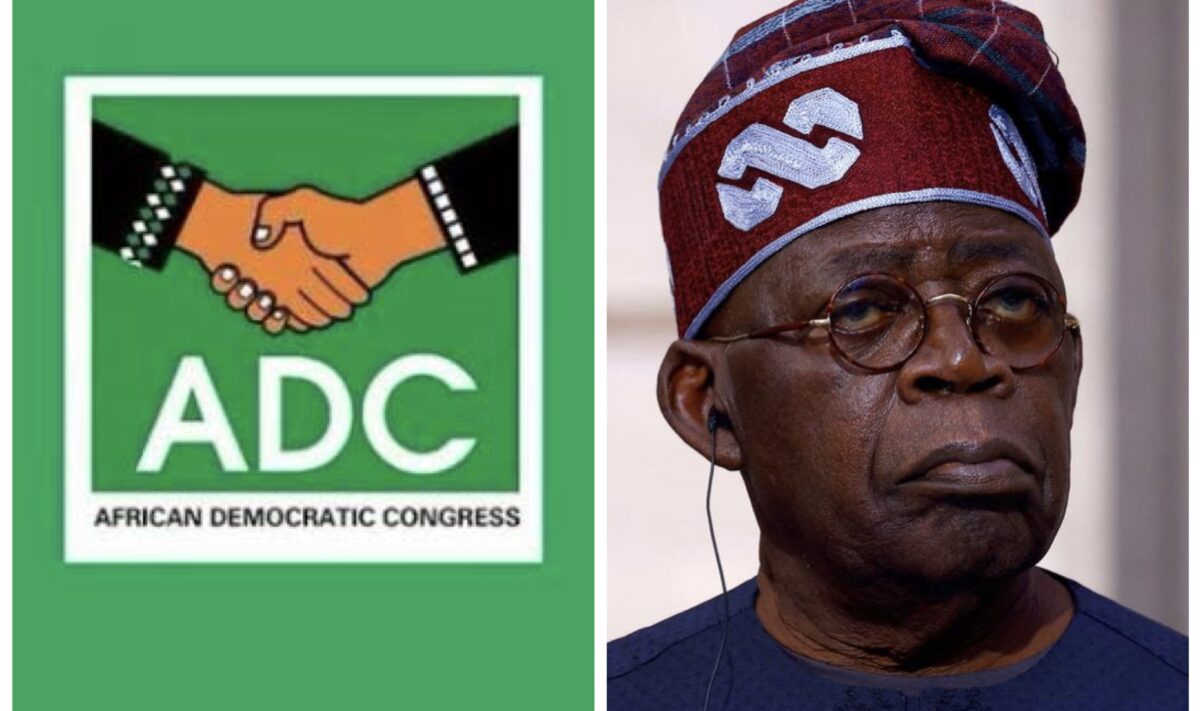
The African Democratic Congress (ADC) has come down hard on the Tinubu administration following the National Assembly’s recent approval of a staggering $21 billion in foreign loans. In a fiery statement, the opposition party labeled the move “fiscal vandalism,” warning that Nigeria is being dragged deeper into a debt crisis that could push the country’s total public debt beyond ₦200 trillion by year’s end—all without visible improvements in infrastructure or economic growth.
ADC’s National Publicity Secretary, Mallam Bolaji Abdullahi, accused President Tinubu of surpassing former President Buhari in reckless borrowing, describing the pattern as a deliberate mortgaging of Nigeria’s future to cover present failures. While Buhari averaged ₦4.7 trillion in borrowing per year, Tinubu has allegedly pushed that figure to ₦49.8 trillion annually—a more than 10-fold increase in just two years!
The ADC also slammed government supporters who claim Tinubu’s borrowing is “less in dollar terms,” pointing out that due to the free-falling naira, these loans cost much more in naira. According to the party, Tinubu’s $1.7B annual loans convert to ₦25.5 trillion, while Buhari’s $4.15B translated to just ₦2.2 trillion yearly back then. The naira collapse, they say, is deepening the debt trap.
Nigeria’s debt reportedly exploded from ₦12.6 trillion in 2015 to over ₦149 trillion, with $35B borrowed externally in 10 years—12 times more than in previous decades. The ADC questioned where all the money has gone, citing poor infrastructure, underfunded universities, failing healthcare, and epileptic power supply.
They also highlighted a report from the Association of Small Business Owners, which showed how excessive borrowing is crippling SMEs, chasing away investors, and overburdening Nigerian families with taxes as over 60% of national income goes to debt servicing.
The ADC concluded by demanding full public disclosure of all loan agreements in the last 10 years, insisting Nigerians deserve to know the terms, interest rates, and beneficiaries of these controversial loans.