Ars Technica and The Verge both report that LG monitors caused a McAfee antivirus pop-up to appear on connected Windows 11 PCs. The pop-up came from an LG app installed silently through a Windows driver update. Microsoft stepped in to stop the ads. The two outlets agree on the core sequence but differ on the details each chose to publish. Neither answers basic questions: how many users were hit, why the app pushed McAfee ads, or when a fix reaches existing machines.
Two tech news sites—Ars Technica and The Verge—have reported that hooking up an LG display to a Windows 11 machine could cause McAfee ads to appear. Both sources agree that the ads came from an LG app that installed itself without the user’s clear consent. Microsoft has since taken action to stop the pop-ups. Both outlets state this much without reservation. Nearly all extra details come from just one of them, and several clear questions remain unanswered in either report. The total number of users or devices hit by the pop-ups is not given by either outlet and remains unknown.
What Happened
The two outlets tell a consistent core story. Plugging an LG monitor into a Windows 11 computer caused the silent install of the LG Monitor App Installer. It came through a Windows driver update. That app then showed a pop-up advertising McAfee antivirus. Microsoft stepped in to shut the pop-ups off. Both Ars Technica and The Verge report each of those points.
Beyond that shared spine, the accounts split on what the ads contained. The Verge, which alone reports this, says the pop-ups also promoted LG’s own apps — though this is unconfirmed by any other outlet. Ars Technica, which alone reports this, says the installer pushed ads for other software too, and that the McAfee ad offered a 30-day free trial — though these details are unconfirmed by any other outlet. Neither outlet contradicts the other here, but neither backs up the other’s specifics either.
On how Microsoft’s fix came about, only The Verge offers an explanation. It reports that Microsoft’s Windows chief, Pavan Davuluri, said LG has agreed to immediately disable the McAfee pop-up. It quotes him pledging that Microsoft will “keep improving here with our ecosystem partners.” This pledge is reported only by The Verge and is unconfirmed by any other outlet. Ars Technica says Microsoft intervened but, on the facts supplied, does not attribute that intervention to Davuluri or describe LG agreeing to anything.
Background
Ars Technica traces the public complaints to Reddit, followed by a video from the YouTube channel Gamers Nexus. Its editor-in-chief, Steve Burke, said the channel paid $1,200 for an LG UltraGear 3GX900A-B gaming monitor bought for testing. The price dropped to $600 two days later. This price claim is reported only by Ars Technica and is unconfirmed by any other outlet. Burke also said the pop-up behavior was repeated “several times” across “multiple” Windows 11 systems, according to Ars Technica. That detail is not confirmed by any other outlet. The Verge, on the facts provided, does not mention Gamers Nexus, Reddit, or the monitor’s price at all.
Who This Affects
Anyone who connected an LG monitor to a Windows 11 PC is the group both outlets point to. That is the trigger they both describe. How large that group is, neither says. The number of affected users or devices is absent from both reports. The only figure that hints at the scale comes from Ars Technica. It cites Gamers Nexus’s Burke saying the behavior was reproduced across “multiple” systems during testing. That is not a count of real-world victims.
What Has Changed
Before Microsoft’s intervention, the LG app was serving the McAfee pop-up on affected machines. After it, the pop-ups are meant to stop. The Verge frames the change as LG agreeing, at Microsoft’s prompting, to immediately disable the McAfee pop-up. What is not clear in either account is whether that fix reaches PCs where the app is already installed, or only prevents new installations. It also does not say whether affected users can remove the app themselves.
Timeline
- July 23, 2026 — Ars Technica publishes its report on the LG-installed McAfee pop-ups. (Ars Technica)
- July 24, 2026 — The Verge publishes its report, citing Microsoft's Windows chief on LG's agreement to disable the pop-up. (The Verge)
Key Features
- The LG Monitor App Installer arrived through a Windows driver update, without an explicit install prompt, according to both outlets.
- The pop-up advertised McAfee antivirus; Ars Technica alone reports it offered a 30-day free trial.
- Ars Technica says the app pushed other software ads too; The Verge says it also advertised LG's own apps.
- Microsoft intervened to stop the pop-ups, with The Verge attributing the resolution to Windows chief Pavan Davuluri and LG's agreement.
Expert Analysis
The most useful thing to say about this coverage is what it does not establish. Two outlets agree on the mechanism, but the whole scale of the problem rests on a single source’s testing. Burke’s “several times” across “multiple” systems, as reported by Ars Technica, describes reproduction in a lab, not a headcount of affected owners. Nobody has published how many people saw the pop-up.
The causal chain also has a gap neither outlet closes. Both say the LG app came through a Windows driver update, which puts Microsoft’s own distribution channel somewhere in the path. Yet the fix, as The Verge tells it, was LG agreeing to disable the pop-up rather than Microsoft blocking the app at the source. Why an ad-serving installer moved through Windows Update in the first place, and whether Microsoft’s channels vetted it, is unexplained.
The $1,200-to-$600 price drop Ars Technica attributes to Burke is a striking detail with no stated connection to the pop-up story. It sits in the reporting as color about the monitor Gamers Nexus tested, not as evidence about the ads. Read carefully, it proves nothing about the McAfee issue itself.
What This Means
For an owner of an LG monitor running Windows 11, the practical question is whether the pop-ups stop on a machine that already has the app. The Verge’s account of LG agreeing to “immediately disable” the pop-up suggests relief is coming. But the wording does not clarify whether that reaches existing installations or only new ones. That point is unconfirmed by any other outlet. Davuluri’s line about continuing to “keep improving here with our ecosystem partners,” as quoted by The Verge, reads as a forward-looking pledge rather than a description of a completed fix.
Absent from both reports is any word from LG explaining why its app was serving McAfee ads. There is no statement from McAfee, and no detail of a commercial deal between the two. Until those appear, the reader is left with a resolved symptom and an unexplained cause.
Pros and Cons
Pros
- Microsoft intervened rather than leaving the pop-ups in place, and The Verge reports LG agreed to disable the McAfee ad.
- Two independent outlets back up the core mechanism, so the basic account is not resting on a single source.
Cons
- An LG app was installed silently through a Windows driver update, meaning users did not knowingly consent to it.
- Neither outlet says how many devices were affected or whether the fix cleans up existing installations.
Frequently Asked Questions
How did the McAfee pop-up get onto my Windows 11 PC?
Both Ars Technica and The Verge report that connecting an LG monitor triggered the silent installation of the LG Monitor App Installer through a Windows driver update. That app then showed the McAfee pop-up.
Has the problem been fixed?
Microsoft intervened to stop the pop-ups, per both outlets. The Verge reports that LG agreed to immediately disable the McAfee pop-up. Neither report says whether the fix reaches PCs where the app is already installed.
Can I remove the LG app myself?
Neither Ars Technica nor The Verge says whether affected users can remove the app or reverse the installation. That is one of several details missing from the reporting.
Which monitors were affected?
Both outlets point to LG monitors connected to Windows 11 PCs. Ars Technica specifically names the LG UltraGear 3GX900A-B, the model Gamers Nexus said it tested. But the reporting does not present that as the only affected model.
Conclusion
The story that survives scrutiny is narrow but solid: LG monitors caused a McAfee pop-up on Windows 11 through a silently installed app, and Microsoft got it stopped. What to watch now is whether LG explains why its installer was serving antivirus ads, whether McAfee comments on any deal, and whether Microsoft addresses how an ad-serving app reached users through a driver update. Until an outlet answers whether the fix cleans up machines that already have the app, owners cannot be sure the pop-up is gone for good. However, no LG or McAfee statement has appeared in either report, so the reason for the ads and any commercial deal remain unconfirmed.
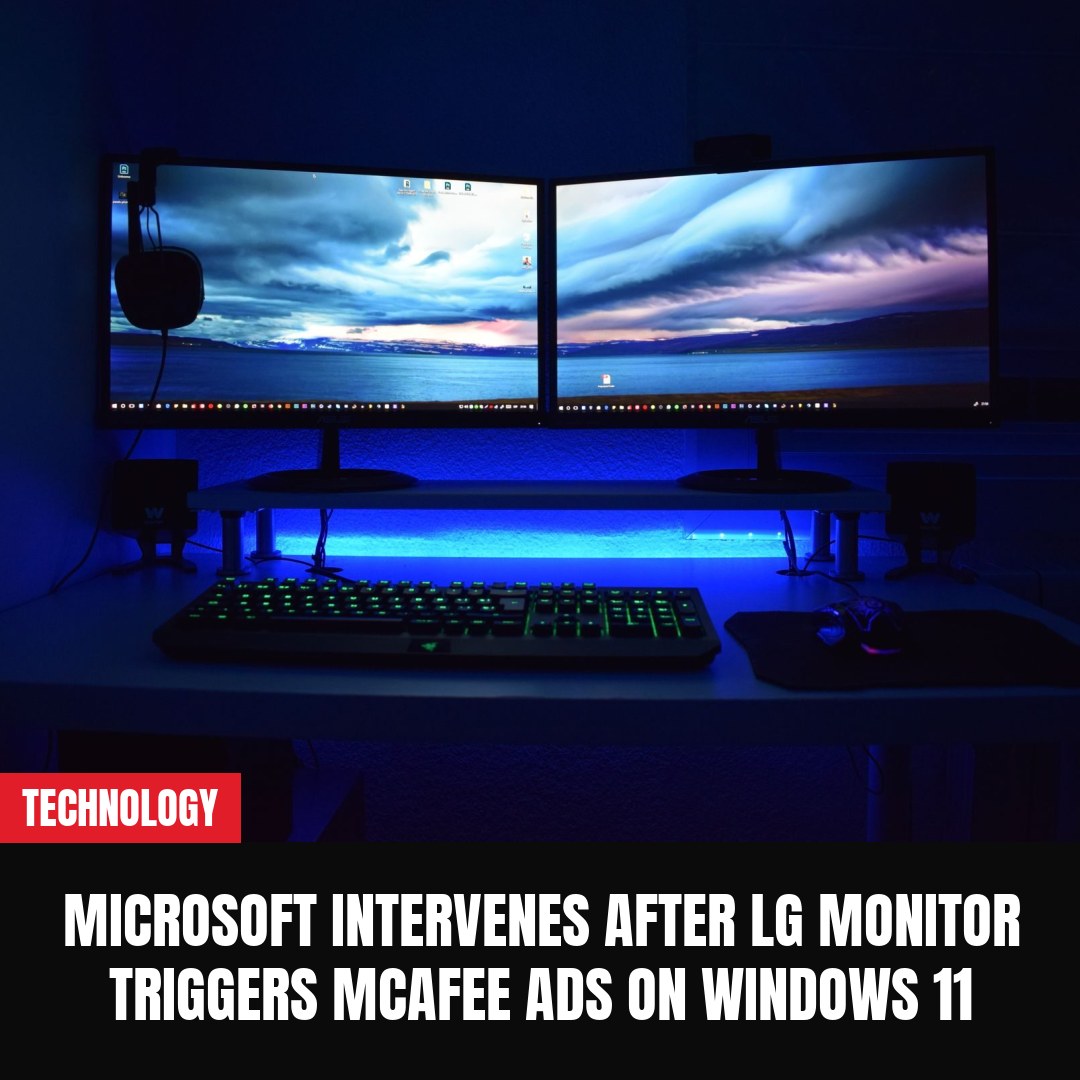
Photo by XXSS IS BACK on Pexels